Staphylococcus aureus, particularly the Methicillin-Sensitive Staphylococcus aureus (MSSA) strain, is a significant pathogen responsible for various infections ranging from skin infections to life-threatening conditions like sepsis and pneumonia. Ensuring accurate and reliable detection of MSSA through molecular methods like Polymerase Chain Reaction (PCR) is critical in both clinical and laboratory settings. To guarantee the accuracy of MSSA detection, laboratories use PCR External Quality Control [Mid Level] standards to monitor the performance of their diagnostic assays.
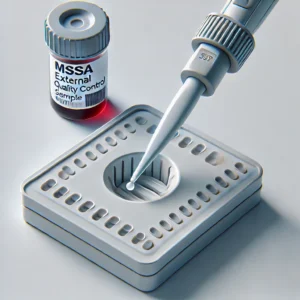
Importance of External Quality Control in MSSA PCR Testing
External quality control (EQC) plays a vital role in validating the accuracy, precision, and reliability of PCR-based assays. These controls are designed to mimic clinical samples and help identify potential issues with the assay, reagents, or instrumentation. By using an external control, laboratories can detect false negatives or positives, helping to ensure diagnostic accuracy.
- Monitor Consistency: The Mid Level MSSA PCR control provides a consistent and quantifiable amount of MSSA genetic material. This allows laboratories to check for variations in assay performance, ensuring reproducible results across multiple tests. The importance of consistency in PCR diagnostics is well-documented on CDC.gov and NIH.gov.
- Prevent False Results: By running MSSA PCR External Quality Controls in parallel with clinical samples, laboratories can identify and prevent false positives or negatives. This is particularly important for MSSA, where delayed or inaccurate diagnosis can lead to improper treatment and serious complications. More information on preventing diagnostic errors can be found at FDA.gov.
- Compliance with Regulatory Standards: In many regions, clinical laboratories are required to run external quality controls as part of compliance with regulatory bodies like the FDA and CLIA (Clinical Laboratory Improvement Amendments). External controls ensure that laboratories meet the necessary standards for diagnostic testing. Further details on regulatory standards for PCR testing are available at FDA.gov.

Features of MSSA PCR External Quality Control [Mid Level]
- Optimized Concentration: The Mid Level control is calibrated to provide a moderate concentration of MSSA genetic material, representing typical bacterial loads found in clinical samples. This level ensures that the assay is sensitive enough to detect MSSA, even in cases with intermediate bacterial counts.
- Stability: MSSA PCR External Quality Control samples are stable over extended periods and can be stored at controlled temperatures, ensuring consistency in test performance over time. For guidelines on the storage and stability of PCR controls, refer to NIH.gov.
- Compatibility: This control is designed to work seamlessly with various commercial PCR platforms and assays, making it adaptable for laboratories using different PCR technologies. Compatibility with widely used systems ensures broad applicability. Learn more about the compatibility of quality controls across platforms on NCBI.
- Routine Testing: The Mid Level MSSA PCR control is ideal for routine laboratory use, particularly in high-throughput environments. By integrating external controls into regular workflows, labs can ensure ongoing accuracy in diagnostic testing.
Application in Clinical Diagnostics
- Infection Control: MSSA is a common cause of hospital-acquired infections (HAIs). Accurate detection through PCR, supported by external quality controls, helps prevent the spread of MSSA in healthcare settings. Understanding how MSSA spreads and the importance of controlling infections is discussed in resources from CDC.gov.
- Treatment Monitoring: MSSA infections require prompt and appropriate antibiotic treatment. External quality control helps ensure that PCR tests provide reliable results, which in turn helps clinicians prescribe the correct antibiotics, reducing the risk of antibiotic resistance. For more on antibiotic stewardship, visit CDC.gov.
- Clinical Research: MSSA PCR external controls are also used in research settings to validate new diagnostic assays and study bacterial resistance patterns. External quality controls allow researchers to confidently interpret their data and contribute to the development of new diagnostic technologies. For details on current MSSA research, explore studies published on PubMed.

Protocol for Using MSSA PCR External Quality Control [Mid Level]
- Preparation: Thaw the MSSA control according to the manufacturer’s instructions. Ensure that the sample is mixed thoroughly before use.
- Sample Loading: Add the control to the PCR reaction mixture as you would with a clinical sample, following the same protocol for amplification and detection.
- Data Analysis: After running the PCR assay, compare the results of the external control with expected values to verify assay performance.
- Documentation: Record the results of the quality control run and ensure compliance with any laboratory or regulatory documentation requirements.
For more detailed protocols, you can access additional resources from FDA.gov and NIH.gov.
Conclusion
Staphylococcus aureus (MSSA) PCR External Quality Control [Mid Level] is essential for maintaining the accuracy and reliability of diagnostic assays. By using these controls regularly, laboratories can ensure consistent test performance, comply with regulatory standards, and provide clinicians with the accurate results needed to manage MSSA infections effectively.